


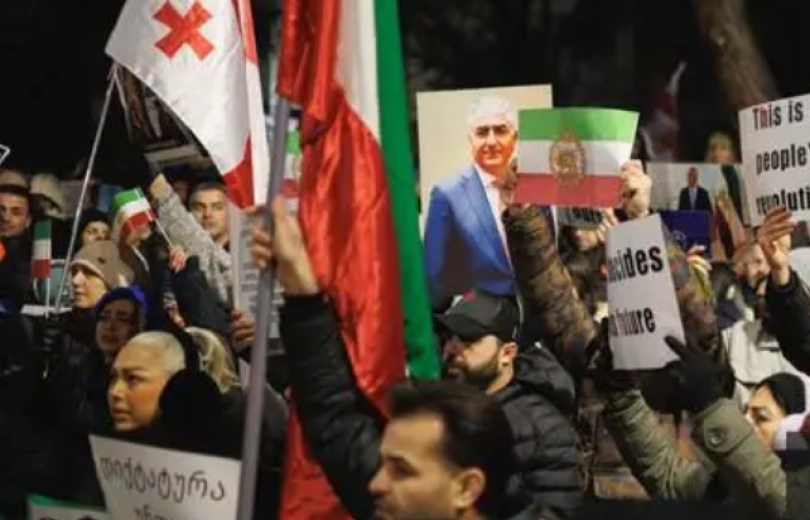
Iranian citizens living in Georgia say Georgian Dream authorities are exposing opponents of the Islamic Republic to detention and possible deportation, while Iran’s Embassy in Tbilisi uses consular services to pressure activists who have joined anti-regime protests.
In a statement, the group alleged that several Iranians who participated in demonstrations outside the Iranian Embassy and the Georgian Parliament have been denied passport renewals and other essential consular documents. The resulting lack of valid identification has reportedly made it difficult for them to renew residence permits, maintain employment or continue their studies, leaving some vulnerable to arrest and deportation.
The activists also accused Georgian courts and immigration authorities of rejecting asylum applications and issuing removal orders in accelerated proceedings, sometimes without the applicants or their lawyers being present. They warned that returning publicly known Iranian political and religious activists to Iran could expose them to detention, prosecution, torture, lengthy imprisonment or the death penalty.
The statement alleged apparent “bureaucratic synchronization” between Georgian institutions and the Iranian Embassy. It cited the case of Iman Asghari, who has reportedly been held in a Georgian immigration detention centre since May 8 after his passport expired. According to the statement, an Iranian Embassy official said his documents would not be renewed so that he could be deported and made an example for others.
The group also cited Hadi Rostami, whom it described as an Iranian media activist included on a regime blacklist. Rostami was reportedly detained by Georgian authorities for 10 days but avoided deportation because he still possessed a valid passport and was able to travel to Armenia.
The allegations come amid broader concern over the growing influence and assertiveness of the Iranian regime in Georgia. A recent Hudson Institute report, Iran’s Georgia Turn, documented what its authors described as an expanding Iranian influence infrastructure involving religious, educational, commercial and charitable entities, including organizations linked to institutions sanctioned or identified by Western governments as connected to Iran’s state and security structures.
The report also argued that Georgia’s increasingly permissive political environment has allowed Tehran-linked actors to expand their activities, particularly among Shia communities, while maintaining ties with Iranian state institutions. Its publication prompted an unusually aggressive reaction from both the Georgian government and the Iranian Embassy.
Iran’s ambassador to Georgia, Seyyed Ali Mojani, publicly attacked the Hudson report and defended the presence of Iranian organizations and companies in the country. He also endorsed the Georgian authorities’ investigation of one of the report’s authors, reflecting what critics describe as the embassy’s growing confidence and political assertiveness in Georgia.
Georgian Dream officials, including Prime Minister Irakli Kobakhidze, subsequently accused the report’s Georgian co-author of “treason” and suggested that law-enforcement agencies could take action against him.
The Iranian activists called on UNHCR, Amnesty International and Human Rights Watch to intervene. They urged Georgian authorities to halt the detention and deportation of undocumented activists, respect the international principle of non-refoulement and provide alternative identification documents to Iranians whose papers are being withheld by the embassy.




 დახურვა