


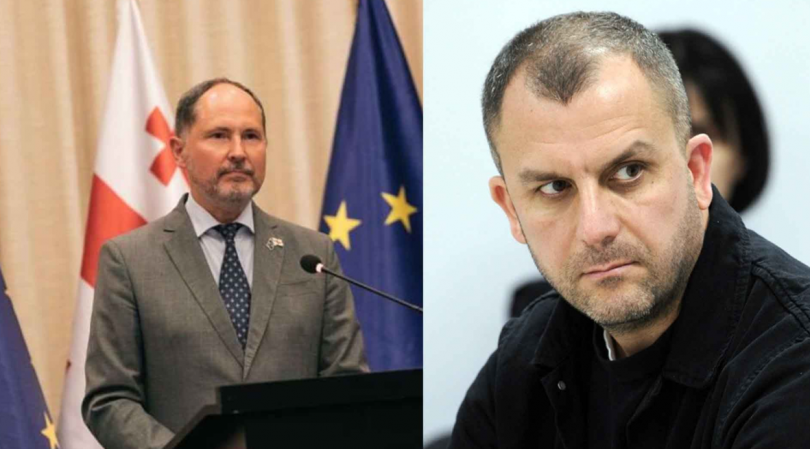
A prominent Georgian journalist Gela Mtivlishvili, founder and editor of Mtis Ambebi (Mountain Affairs) outlet has launched a scathing critique against the European Union delegation in Georgia, accusing it of undermining press freedom and engaging in direct editorial interference against independent media in Georgia.
The journalist detailed instances of direct intervention by EU delegation’s representatives in two investigative reports that were funded by an EU-supported project. One of these reports focused on Parliament Speaker Shalva Papuashvili’s alleged tax evasion and corruption, while the other investigated the Shovi tragedy, when a landslide killed 32 people due to lack of rescue equipment and negligence. Mtivlishvili claimed the EU delegation issued an ultimatum to him demanding changes to these reports—an action that the journalist firmly refused. In retaliation, the delegation terminated the project’s funding.
This alleged act of censorship, the journalist noted, coincided with a crucial legal battle at Georgia’s Constitutional Court against the controversial "foreign agents" law, and the funding termination occurred just one day before a key court hearing.
The journalist recalled a related controversy from the previous year when Papuashvili publicly criticized the EU delegation for allowing the investigative film "Crime in Shovi" to become a finalist for the EU Prize for Journalism, despite it not winning. Later, the same film received top investigative journalism honors from the European Foundation, with high praise from an esteemed international jury, including Brant Houston, Chairman of the Global Investigative Journalism Network’s board, and Mark Horvit, a professor at the Missouri School of Journalism.
Regarding the alleged censorship attempts, the journalist asserted that multiple international organizations had been informed and that efforts were underway to push for a response from Brussels. However, due to the dire situation facing independent media in Georgia, time and resources for such action had been limited.
Citing professional integrity as the primary reason, the journalist announced their decision not to participate in any EU-organized media prize this year, calling into question its integrity.


 დახურვა